Modern industrial production is moving at a speed where efficiency, accuracy, and automation define success. Companies are constantly searching for ways to reduce manual workload while increasing output consistency and operational stability. In this evolving environment, packaging automation has become one of the most critical parts of the manufacturing process.
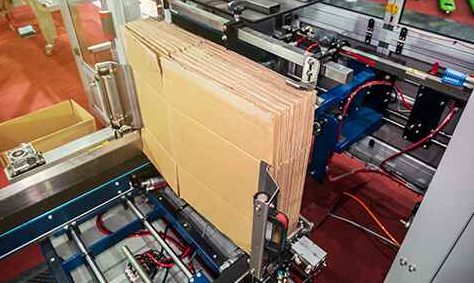
Among the essential machines used in this system is the case erector, a device designed to automatically form flat cardboard blanks into fully shaped cartons ready for filling and sealing. This single process plays a surprisingly important role in maintaining smooth packaging operations across high-volume industries.
A case erector is not just a mechanical unit. It is a foundational automation system that ensures packaging lines operate without interruption, reducing dependency on manual box setup and improving overall production flow.
The Importance of Packaging Automation in Modern Manufacturing
In traditional packaging environments, forming cartons was a manual task. Workers would take flat boxes, fold them into shape, seal the bottom, and prepare them for filling. While this process was simple, it became inefficient as production demand increased.
Manual carton setup often created delays, inconsistencies, and unnecessary labor costs. As industries scaled, these limitations became more noticeable, especially in sectors where speed and accuracy are critical.
This challenge led to the development of automated packaging systems that could handle repetitive tasks more efficiently, and the case erector became one of the most important innovations in this transformation.
See also: Future of Short-Form Video Content: Instagram Reel Maker
What a Case Erector Does in Industrial Systems
A case erector is designed to take flat corrugated cardboard sheets and transform them into fully formed boxes. It folds, shapes, and seals the bottom flaps so that the case is ready for filling on the production line.
This automated process eliminates the need for manual box preparation and ensures that every carton is formed with consistent dimensions and structure.
By standardizing box formation, a case erector improves downstream packaging accuracy and ensures that products fit correctly without damage or misalignment.
How Case Erectors Improve Production Efficiency
One of the biggest advantages of using a case erector is the improvement in production speed. In manual systems, box preparation often becomes a bottleneck that slows down the entire packaging line.
Automated case forming systems eliminate this delay by continuously supplying ready-to-fill cartons to the production process. This ensures a steady workflow without interruptions.
As a result, manufacturers can significantly increase throughput while maintaining consistent packaging quality across large production volumes.
Reduction of Manual Labor and Operational Costs
Labor-intensive packaging operations require significant workforce involvement, especially in high-volume production environments. This increases operational costs and introduces variability in performance.
A case erector reduces dependency on manual labor by automating one of the most repetitive tasks in packaging operations. This allows companies to reallocate human resources to more value-added roles such as quality control and system supervision.
Over time, this shift leads to lower labor costs and improved operational efficiency.
Consistency and Structural Accuracy in Packaging
Consistency is extremely important in packaging operations because even minor variations in box formation can affect product safety and transportation efficiency.
Case erectors ensure that every carton is formed with the same dimensions, fold accuracy, and sealing strength. This uniformity improves stacking stability and reduces the risk of damage during storage or shipping.
For industries that handle fragile or high-value products, this consistency is essential for maintaining product integrity.
Integration with Automated Packaging Lines
Modern manufacturing systems are highly interconnected. Packaging machines are no longer standalone units but part of a fully synchronized production ecosystem.
A case erector integrates seamlessly with other machines such as case packers, sealing machines, and conveyor systems. This allows for a continuous flow where boxes are formed, filled, and sealed without manual interruption.
This integration supports high-speed production environments and ensures smooth operational transitions between different stages of packaging.
Reliability and Continuous Operation Capability
Industrial environments require machines that can operate continuously under heavy workloads. Any interruption in packaging can disrupt the entire production cycle and lead to delays.
A case erector is designed for high reliability, using durable components and stable mechanical systems that support long-term continuous operation.
This ensures that production lines remain active and efficient even during extended working hours.
Role of Case Erectors in Modern Supply Chains
Efficient packaging plays a direct role in supply chain performance. Properly formed and securely packed cartons improve storage efficiency, transportation safety, and distribution speed.
Case erectors help standardize packaging output, making logistics operations more predictable and efficient. This is especially important for large-scale manufacturers that supply products across multiple regions.
By improving packaging consistency, case erectors indirectly enhance supply chain reliability.
Future Development of Case Erector Technology
The future of case erector systems is moving toward smarter and more adaptive automation. Emerging technologies are introducing features such as automatic size adjustment, sensor-based error detection, and real-time performance monitoring.
These innovations will allow machines to adapt quickly to different packaging requirements without manual setup changes.
As manufacturing continues to evolve toward intelligent automation, case erectors will become even more advanced and integrated into fully autonomous production lines.
Conclusion
The case erector has become a vital component of modern packaging automation systems. By automating the process of carton formation, it improves efficiency, reduces labor dependency, and ensures consistent packaging quality across production lines.
Its role in supporting continuous workflow and integrating with other packaging machines makes it an essential part of industrial manufacturing environments.
As industries continue moving toward smarter and more automated systems, case erectors will remain a key technology that supports speed, accuracy, and operational stability in modern production facilities.