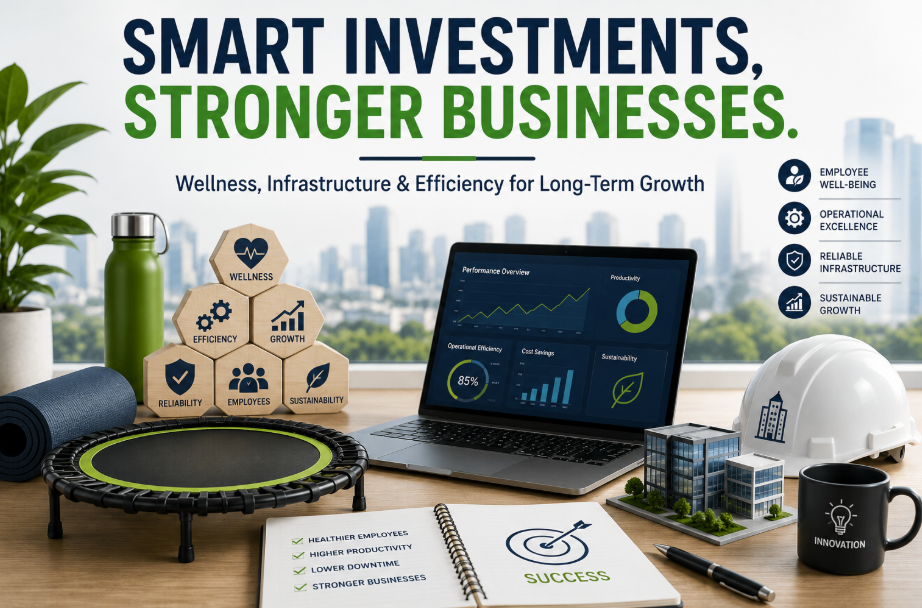
Business success has traditionally been measured by revenue, customer acquisition, and operational efficiency. While these indicators remain important, modern organizations are beginning to recognize that long-term growth depends on much more than financial metrics alone. Employee well-being, workplace design, infrastructure reliability, and strategic investment in everyday operations all contribute to stronger organizational performance.
Companies across industries are shifting away from short-term productivity hacks and instead building environments where employees can consistently perform at their best. Whether operating a technology startup, a manufacturing business, or a professional services firm, leaders are discovering that healthy workplaces and dependable infrastructure often produce measurable business advantages.
Rather than treating wellness, facilities management, and operational planning as separate initiatives, successful organizations increasingly integrate them into a unified business strategy.
The Business Case for Employee Well-Being
Employees spend a significant portion of their lives at work. Their physical comfort, mental focus, and overall health directly influence productivity, collaboration, and innovation.
Organizations that actively encourage movement throughout the workday often experience improvements in concentration and employee satisfaction. Small initiatives, such as standing meetings, walking discussions, ergonomic workstations, and dedicated wellness spaces, help reduce fatigue while creating a more energetic workplace culture.
These improvements also benefit employers by reducing absenteeism and supporting higher levels of engagement across teams.
Business leaders increasingly view workplace wellness as an investment rather than an expense because healthier employees tend to produce more consistent, higher-quality work.
See also: Buying ED Meds Online in 2026? Run This 6-Point Check Before You Pay
Small Investments Can Deliver Significant Returns
Many businesses assume workplace improvements require major capital expenditures. In reality, incremental investments often provide meaningful benefits.
Simple changes may include:
- Better lighting
- Adjustable desks
- Improved break areas
- Indoor plants
- Flexible work schedules
- Wellness incentives
Some organizations also introduce recreational spaces where employees can take short movement breaks during long workdays. For example, light exercise using a rebounder offers a practical way to encourage brief periods of physical activity without requiring extensive gym facilities. These short breaks can help employees recharge before returning to focused work.
Businesses that support healthy habits often experience stronger employee retention because workers appreciate organizations that invest in their overall well-being.
Operational Efficiency Begins Behind the Scenes
Customer experience often depends on processes that customers never see.
Reliable networks, secure electrical systems, properly maintained equipment, and preventive maintenance programs ensure that business operations continue without unnecessary interruptions.
Organizations frequently invest heavily in marketing and sales while overlooking the infrastructure that enables daily operations. However, a single unexpected system failure can disrupt customer service, delay production, and create significant financial losses.
Business continuity planning therefore includes regular inspections, equipment upgrades, and partnerships with qualified technical professionals capable of maintaining essential systems before problems develop.
This proactive mindset reduces operational risk while improving long-term efficiency.
Supporting Modern Hybrid Work Environments
Hybrid work has permanently changed how businesses think about office space.
Instead of designing offices solely around desks and conference rooms, companies are creating collaborative environments that encourage creativity while accommodating flexible schedules.
Employees visiting the office now often prioritize activities that are difficult to replicate remotely, including brainstorming sessions, team workshops, mentoring, and relationship building.
As a result, organizations are redesigning office layouts to include quiet work zones alongside collaborative spaces and wellness areas.
Some businesses have even incorporated compact activity corners where staff can briefly use a fitness trampoline during scheduled wellness breaks. While participation is entirely optional, these initiatives reflect a broader commitment to encouraging movement during sedentary workdays.
The goal is not to create a fitness center inside every office but rather to support healthier daily routines that complement demanding professional schedules.
Infrastructure Is a Competitive Advantage
Technology receives considerable attention in digital transformation strategies, but physical infrastructure deserves equal consideration.
Reliable electrical systems, networking equipment, security installations, and facility management all contribute to uninterrupted operations.
As companies expand internationally, they often collaborate with specialized contractors in regional markets. For example, organizations managing projects in Finland may require the services of a sähkömies espoo (electrician in Espoo) to ensure commercial electrical installations comply with local regulations and industry standards.
Choosing experienced professionals helps businesses minimize downtime, improve workplace safety, and support future expansion projects.
Infrastructure investments may not generate immediate headlines, but they frequently determine whether businesses can scale efficiently over time.
Creating a Culture That Supports Innovation
Innovation rarely happens by accident.
It develops in environments where employees feel supported, trusted, and equipped with the resources they need to succeed.
Business culture extends beyond mission statements or motivational posters. It is reflected in everyday decisions involving communication, leadership, learning opportunities, and workplace design.
Organizations that actively seek employee feedback often identify operational improvements that leadership might otherwise overlook.
Encouraging experimentation also allows teams to discover more efficient workflows while continuously improving products and services.
When employees believe their ideas matter, they become more invested in organizational success.
Technology Supports People, Not the Other Way Around
Digital transformation should simplify work rather than complicate it.
Automation platforms, cloud collaboration tools, artificial intelligence, and business analytics all offer significant advantages when implemented thoughtfully.
However, technology alone cannot solve organizational challenges.
Successful implementation requires employee training, clear communication, and leadership support.
Businesses that balance technological innovation with human-centered management often experience smoother adoption and stronger long-term results.
Rather than replacing people, technology performs repetitive tasks so employees can focus on strategic thinking, customer relationships, and creative problem-solving.
Measuring Long-Term Business Value
Modern organizations increasingly evaluate success using broader performance indicators.
Beyond quarterly revenue, businesses monitor metrics such as:
- Employee engagement
- Staff retention
- Customer satisfaction
- Operational resilience
- Workplace safety
- Productivity improvements
- Training effectiveness
These indicators provide a more comprehensive understanding of organizational health.
Companies that consistently monitor these factors are better positioned to identify emerging challenges before they become costly problems.
Continuous improvement becomes easier when leadership relies on data rather than assumptions.
Sustainability Starts with Smarter Decisions
Business sustainability involves more than environmental responsibility.
It also includes building resilient organizations capable of adapting to changing markets.
Energy-efficient buildings, preventive maintenance, digital workflows, employee development, and responsible resource management all contribute to sustainable growth.
Organizations that optimize existing resources often reduce operating costs while improving long-term competitiveness.
This balanced approach benefits employees, customers, investors, and the communities businesses serve.
Forward-thinking companies recognize that sustainable growth results from thousands of thoughtful operational decisions rather than one transformative initiative.
Conclusion
Building a successful business today requires a holistic approach that extends beyond financial performance alone. Organizations that prioritize employee well-being, reliable infrastructure, operational excellence, and continuous improvement create stronger foundations for sustainable growth. By making thoughtful investments in both people and processes, businesses become more resilient, adaptable, and better prepared to meet future challenges while delivering lasting value to customers and stakeholders alike.