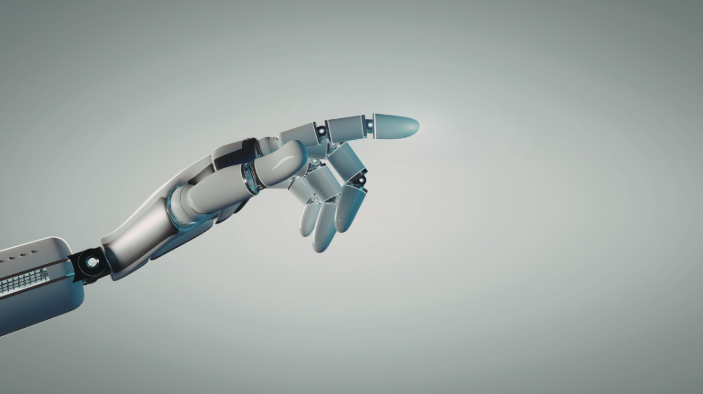
The global industrial landscape is going through a silent but powerful transformation. Production lines that once depended entirely on manual effort are now shifting toward highly automated systems that prioritize precision, consistency, and uninterrupted performance. This change is not happening overnight, but it is steadily reshaping how factories, warehouses, and advanced production units operate across the world.
At the core of this transformation are robotic arm manufacturers, the specialized engineering companies that design and build machines capable of performing human-like movements with extreme accuracy. These manufacturers are no longer just equipment providers; they are becoming key drivers of industrial intelligence and automation strategy.
As industries face increasing pressure to reduce errors, improve efficiency, and meet rising production demands, robotic systems are becoming essential rather than optional.
How Industrial Automation Has Evolved
Industrial systems have evolved through multiple stages, each defined by improvements in technology and productivity. Early manufacturing relied heavily on manual labor, which limited output and created inconsistency in production quality. Later, mechanical machines introduced basic automation, but they still required significant human supervision.
The modern era is defined by intelligent automation, where machines are not only programmed to repeat tasks but also optimized for precision, adaptability, and continuous operation. Robotic arms represent one of the most advanced forms of this evolution, bridging the gap between mechanical strength and digital intelligence.
This evolution has created a strong demand for robotic arm manufacturers who can design systems capable of meeting diverse industrial requirements.
See also: Future of Short-Form Video Content: Instagram Reel Maker
What Robotic Arm Manufacturers Actually Build
Robotic arm manufacturers focus on creating advanced mechanical systems that replicate human arm movement using multiple joints, actuators, sensors, and software-driven control systems. These systems are engineered to perform complex tasks such as welding, assembly, packaging, material handling, painting, and inspection.
Each robotic arm is designed with a specific industrial purpose in mind, meaning there is no universal structure that fits all applications. Instead, customization is a key part of the development process.
These manufacturers also integrate software intelligence that allows robotic arms to function autonomously or operate in coordination with other machines within a production line.
Why Industries Are Moving Toward Robotic Systems
One of the main reasons industries are adopting robotic automation is consistency. Human performance can vary due to fatigue, environmental conditions, and workload pressure, but robotic systems maintain stable output regardless of operational duration.
Another major factor is efficiency. Robotic arms can work continuously without breaks, significantly increasing production capacity while reducing downtime.
Accuracy is also a critical advantage. In industries like electronics and automotive manufacturing, even the smallest deviation can lead to defects. Robotic systems minimize such risks by delivering precise and repeatable movements.
These advantages collectively explain the growing reliance on robotic arm manufacturers in modern industrial planning.
Applications Across Different Industrial Sectors
Robotic arms are used in a wide variety of industries due to their flexibility and adaptability. In automotive production, they are widely used for welding vehicle frames, assembling components, and applying paint coatings with consistent precision.
In electronics manufacturing, they handle delicate components that require extremely accurate placement to avoid damage. In logistics and warehouse operations, robotic systems assist in sorting, packaging, and moving goods efficiently.
Even in industries like pharmaceuticals and food processing, robotic arms are used to maintain hygiene standards and ensure precise handling of sensitive materials.
This wide range of applications demonstrates how deeply robotic automation has become integrated into modern industrial systems.
Improving Workplace Safety Through Automation
Industrial environments often involve repetitive, physically demanding, or hazardous tasks. Over time, these conditions can lead to fatigue or workplace injuries among human workers.
Robotic systems help reduce these risks by taking over dangerous or strenuous operations. This allows workers to focus on monitoring, planning, and quality control instead of direct exposure to unsafe environments.
As a result, automation not only improves productivity but also creates safer and more sustainable workplaces.
Integration With Smart Manufacturing Systems
Modern factories are evolving into interconnected digital ecosystems where machines communicate and coordinate in real time. Robotic arms play a central role in this transformation.
These systems are often connected with sensors, data platforms, and centralized control units that allow real-time tracking and optimization of production processes.
This integration helps reduce inefficiencies, minimize downtime, and improve overall operational performance.
Technological Advancements Driving Robotics Forward
The robotics industry is continuously advancing with improvements in artificial intelligence, machine learning, and sensor technologies. These innovations are making robotic arms more intelligent, adaptable, and capable of handling complex tasks with minimal human intervention.
Future systems are expected to become even more autonomous, with the ability to adjust movements based on real-time feedback and environmental changes.
This constant innovation ensures that robotic arm manufacturers remain at the center of industrial progress.
The Future of Robotic Automation
The future of industrial robotics is moving toward collaborative systems where humans and machines work together in shared environments. Instead of replacing human labor entirely, robotic systems will assist workers by handling repetitive or physically intensive tasks.
This collaboration will improve productivity while maintaining human involvement in decision-making and supervision roles.
As technology continues to evolve, robotic arms will become even more efficient, flexible, and intelligent.
Conclusion
The rise of automation has positioned robotic systems as a fundamental part of modern industrial development. At the center of this transformation are robotic arm manufacturers, whose innovations are shaping the future of production, efficiency, and workplace safety.
By combining mechanical engineering with advanced control systems, they are enabling industries to achieve higher levels of precision and performance than ever before.
As global industries continue to evolve, robotic automation will remain a key driver of innovation and industrial growth.