Urban transportation systems are evolving faster than ever before, driven by rising population density, increasing vehicle movement, and the global push toward smarter city infrastructure. In this changing environment, traditional traffic control mechanisms are being replaced with more intelligent, responsive, and contact-free technologies that improve both safety and efficiency.
One of the most impactful innovations in this shift is the PedSense push button, a modern pedestrian activation system designed to eliminate physical contact while improving the responsiveness of traffic signals. Instead of requiring users to press a mechanical button, this system uses smart sensing technology to detect pedestrian intent and trigger crossing signals automatically.
The PedSense push button represents a major step forward in urban traffic management, where convenience, hygiene, and automation come together to create a safer pedestrian experience.
The Limitations of Traditional Push Button Systems
For many years, pedestrian crossings have relied on simple mechanical push buttons. While these systems were effective in earlier urban environments, they now face several limitations in modern cities.
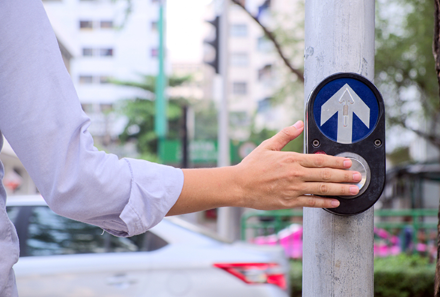
Physical buttons are frequently exposed to harsh weather conditions and constant human interaction, which leads to wear and reduced performance over time. In busy urban areas, these buttons can become unreliable or require frequent maintenance.
Another major issue is hygiene. Since thousands of people touch the same surface daily, it becomes a potential point for contamination, especially in high-density public locations.
Accessibility is also a concern, as traditional buttons can be difficult for elderly individuals or people with disabilities to use efficiently.
These limitations have created a strong demand for more advanced, contactless solutions.
See also: Summer 2026 Beach Essentials: The Gear Actually Worth Packing
How PedSense Push Button Technology Works
The PedSense system is built around advanced sensor-based detection that allows pedestrians to activate crossing signals without physical contact. When a user approaches the device, it detects presence within a defined range and sends a signal to the traffic control system.
This process is designed to be fast, accurate, and reliable, ensuring that pedestrian requests are captured instantly without confusion or delay.
The system also includes visual indicators such as LED lights and audio signals that confirm activation. This feedback mechanism ensures users are aware that their request has been successfully registered.
The PedSense push button therefore replaces physical interaction with intelligent detection, making the system more efficient and user-friendly.
Improving Safety in Public Traffic Environments
Safety is one of the most important priorities in modern traffic design. PedSense technology enhances safety by reducing the need for physical contact with shared surfaces, which lowers the risk of contamination and improves hygiene standards.
In addition, the system provides clear and immediate feedback to pedestrians, reducing uncertainty and helping users understand when their crossing request has been processed.
This is especially useful in busy intersections where clear communication between pedestrians and traffic systems is essential.
Enhancing Accessibility and User Convenience
Modern urban infrastructure must be inclusive and accessible to all users, regardless of physical ability or age. Traditional push buttons often create barriers for individuals who may have difficulty reaching or pressing them.
The PedSense push button solves this challenge by allowing contactless activation. Users simply approach the device, and the system automatically detects their presence.
This makes the crossing experience more convenient for everyone, including elderly pedestrians, children, and individuals carrying items.
Combined with audio and visual signals, the system ensures accessibility for a wide range of users.
Durability and Performance in Real-World Conditions
Traffic systems must operate reliably in all environmental conditions, including rain, dust, heat, and continuous public usage. PedSense technology is designed with durable components that ensure long-term stability and performance.
Its structure is built to withstand harsh outdoor environments while maintaining consistent sensitivity and response accuracy.
A reliable PedSense push button reduces maintenance requirements and ensures uninterrupted operation in high-traffic urban areas.
Integration with Modern Traffic Infrastructure
Today’s transportation systems are increasingly interconnected, forming part of smart city ecosystems. PedSense technology is designed to integrate seamlessly with existing traffic signal controllers and urban management systems.
It communicates efficiently with centralized systems to ensure that pedestrian requests are processed in real time without disrupting vehicle flow.
This integration improves traffic efficiency and helps reduce unnecessary waiting times at intersections.
Role in Smart City Development
Smart cities rely on technologies that improve automation, efficiency, and safety. Pedestrian control systems are a key component of this infrastructure.
PedSense contributes to smart city development by reducing physical contact points, improving traffic responsiveness, and supporting automated traffic management systems.
As cities continue to modernize, contactless systems like the PedSense push button will become essential components of intelligent urban design.
Future of Contactless Pedestrian Systems
The future of pedestrian crossing technology is moving toward fully intelligent and adaptive systems. Future developments may include AI-based detection, predictive traffic control, and advanced sensor fusion technologies.
These systems will be capable of automatically understanding pedestrian movement patterns and adjusting traffic signals in real time.
The PedSense system represents an important step in this evolution, bridging the gap between traditional infrastructure and next-generation smart city solutions.
Conclusion
The PedSense push button is more than a replacement for traditional pedestrian buttons. It represents a complete shift toward safer, smarter, and more efficient urban traffic systems.
By eliminating physical contact, improving accessibility, and enhancing responsiveness, it addresses many of the challenges faced by conventional infrastructure.
As cities continue to grow and evolve, technologies like PedSense will play a critical role in shaping the future of urban mobility and intelligent transportation systems.